Most songbirds head south for the winter, as food supplies disappear, returning to breed in the spring, when booming insect populations can satisfy clamoring broods. Not crossbills.
PBS Nature, January 15, 2019
Most songbirds head south for the winter, as food supplies disappear, returning to breed in the spring, when booming insect populations can satisfy clamoring broods. Not crossbills.
PBS Nature, January 15, 2019
 Filing freedom of information requests can seem daunting for first-timers, especially for freelancers who worry about sinking time and resources into ventures that might not pay off. Yet at a time when our fundamental right to a free press is under attack, reporters need every tool at their disposal to monitor the daily operations of government. FOIA is a critical tool not just for journalists but for democracy.
That message ran through a workshop hosted last month by CUNY Law School, the Craig Newmark Graduate School of Journalism at CUNY and the Society for Environmental Journalists. In the day-long seminar, “Separating Facts from Fake News: Environmental FOIA in the Trump Era,” veteran journalists, environmental lawyers and scholars offered a crash course on FOIA. (Most of the workshop was captured on video and as #FOIAFacts on Twitter.)
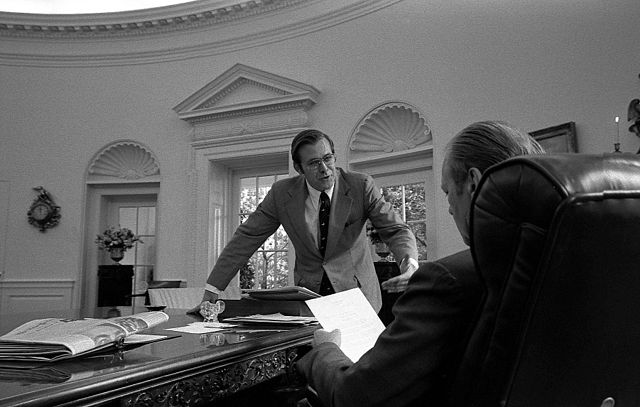
Our right to government transparency was not always a given, CUNY law professor Sarah Lamdan pointed out. FOIA was the brainchild of John Moss, a California congressman who denounced government secrecy during the Cold War, when federal officials classified more and more documents, making the business of government increasingly opaque. Despite years of campaigning for legislation to require government transparency, Moss failed to find a Republican co-sponsor until Lyndon Johnson, a Democrat, assumed the presidency. Suddenly a young Donald Rumsfeld, then an Illinois congressman, signed on because he believed, the Chicago Daily News reported, Johnson’s policies made the law necessary.
Johnson signed the law, begrudgingly, on July 4, 1966, while urging limits on its power in his signing statement. The law’s scope has expanded and contracted ever since, tracking changes in the political landscape. As records once again started disappearing during the Watergate crisis, “Congress passed a huge amendment to make the Freedom of Information Act stronger,” Lamdan said, only to see President Ford veto it as unconstitutional and risky. But Congress overrode Ford’s veto, codifying many of the transparency tools we use today. The 1974 version set limits on how much agencies can charge for records, required responses within 20 days and allowed people to sue for withheld records.
Trump, unlike his predecessors, never issued a memo outlining a position on transparency, Lamdan said. But his administration’s actions speak volumes. Let’s just say, the Trump administration is not a friend of FOIA.
But FOIA, thanks to amendments passed under the Obama administration, requires a presumption of disclosure as a first step: agencies must lean toward releasing rather than withholding records and documents. And with an administration seemingly intent on dismantling not just regulations but also the machinery of government itself, reporters can’t afford to pass on a powerful tool that makes those actions visible to taxpayers — who have a right to know what their government is doing.
Tips and tricks to bring home the documents
No one disputes that successful FOIA requests can take time and effort. You need a working knowledge of the federal Freedom of Information Act, 5 U.S.C. §552, to understand what you can and can’t ask for. You need to think carefully about what you want (and how it might serve a story), whether an agency actually has what you’re looking for and how to frame a request to maximize the odds that you’ll get it. You need to be persistent — don’t hesitate to pester the FOIA officer handling your request. And, above all, you need to be patient.
I’m still waiting for FOIA officers at the Environmental Protection Agency to finish sending me “responsive documents” (as they’re called in FOIA parlance) for a request I filed last June. Luckily, because I asked the officer to send documents on a rolling basis, as he processed them, I had enough evidence to build a case that the EPA relied on flawed science from Monsanto to register a weed killer that’s caused widespread damage to crops, family farms and wild plants throughout soybean country. That story ran in November, but I may well have follow-ups to pitch as more documents come in.
Experts at the workshop focused on using FOIA to pry records from environmental agencies, but much of their advice applies to any federal agency. Among the tips and tricks you can start using right away:
Be specific. Don’t just say, “I want all the emails between the Department of Interior and outside parties on national monuments.” Think about who’s most likely to provide insight on policy decisions. And come up with specific search terms. The narrower, the better.
It helps to put yourself in the shoes of the person handling your request, said Eric Lipton of The New York Times. Think about how you would run a query if you had access to a federal email system. For a story about industry influence over the EPA’s pesticide office, Lipton asked for correspondence between one person at the agency — Richard Keigwin, head of the Office of Pesticide Programs — and industry players and lobbyists, using the outside parties’ email domain names as a roadmap. “The officer goes to this individual’s email account and does queries on those domain names, Whatever emails come up from those domain names are the emails that are going to be produced as part of this FOIA request,” Lipton said.
“That’s very helpful to the officer, because if I were to just say, ‘Give me all emails to Richard Keigwin that have to do with pesticides, well the guy’s in charge of the pesticides program, so I mean, how many emails is that going to be? How many thousands of pages?” Limit your requests to those parties you think have an interest in the issue you’re investigating.
Be specific about dates, too, but don’t limit the end date, advised ProPublica research editor Derek Kravitz. “The end date should always be until this request is finally fulfilled,” Kravitz said. “It should never be a specific date because they can use that, wait a year and then only give you that limited date range. And that can hurt you in the newsgathering process.”
Simplify, simplify. Agencies tend to classify requests. The EPA divides them into simple, complex and expedited, and each has different average response times. The average number of working days it takes to complete a complex request for EPA headquarters is 267 days, Lipton said. The average response for a simple request is 27 days.
If you put in a very narrow request by, for example, specifying email correspondence between two people on a given date, involving a specific issue or subject line, you’ll get it back in a matter of weeks, he advised. “If you really want something quickly, you can do a simple request and you may get it really, really fast.”
Ask for electronic records. The Center for Public Integrity’s Jie Jenny Zou recommends asking for “electronic and machine-readable records.” That prevents agencies from giving you a photo of a record, forcing you to try to run them through an optical character recognition program, which is time-consuming and may not catch everything. “And if you are requesting data,” she said, “try to ask for data in its native format or nonproprietary format. So instead of Excel, ask for a comma-separated-values file, or csv file.”
Befriend the FOIA officer. Don’t just rely on email. Pick up the phone. FOIA officers can tell you what limitations they’re operating under and help you narrow search terms, dates or names to produce documents on a reasonable timeline. I’m on a first-name basis with an EPA FOIA officer who even brought in his supervisor to help me get documents I was after.
If you’re a freelancer and your request seems hopelessly stalled, don’t hesitate to drop names, Zou said. FOIA officers often aren’t familiar with ProPublica, she said, but they know its collaborators, like the Associated Press. When she mentions big-name partners, documents magically materialize. “A freelancer can do that too, if you have a relationship with an editor for a strong publication,” Zou said.
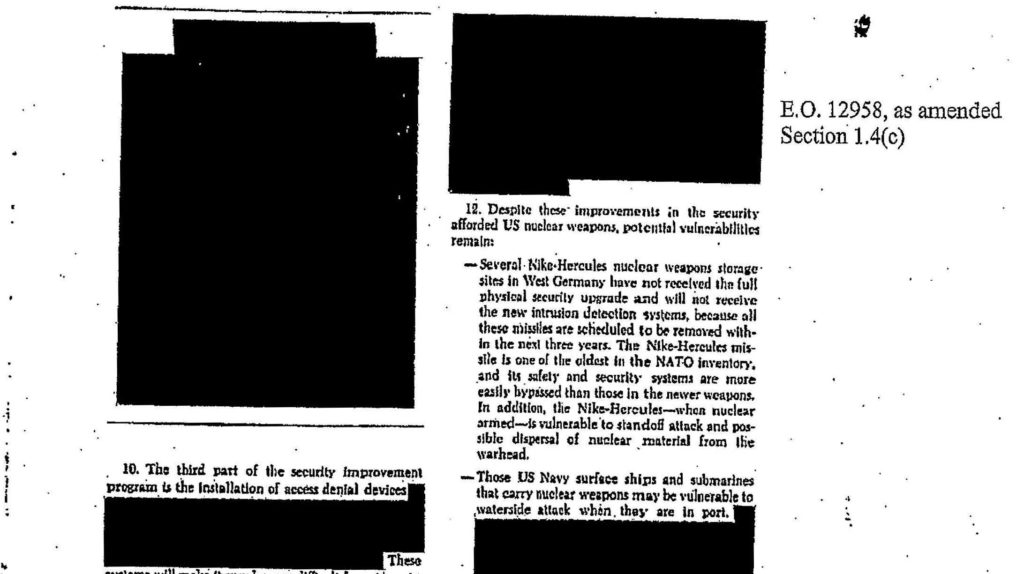
Ask agencies to justify redactions. Suing an agency to challenge redacted materials isn’t a practical option for journalists who don’t have access to the legal resources of a major outlet. But Kravitz suggests a workaround: the Vaughan Index, a document agencies prepare in opposing the disclosure of information under FOIA. “You can request a Vaughan Index, which will literally go through every exemption, every redaction on every page, and give a justification as to why they feel that meets the exemption criteria,” Kravitz said.
You can use the justifications to challenge the redactions or to report on the agency’s failure to disclose. You can also triangulate by filing matching state public records requests or requests to other federal agencies to see if their redactions match. Most likely they won’t, since the redaction process is subjective. Then you can try to piece together all the unredacted parts to see if they tell a story.
Ease into the FOIA process by piggybacking on other requests. Federal agencies log all their FOIA requests. You can ask for an agency’s log to see what other people have asked for on an issue you’re interested in, Then ask for records that look promising.
For a story about the Bureau of Safety and Environmental Enforcement, The Times’ Lipton asked for the agency’s FOIA log and saw that a person with the Project on Government Oversight was asking for the BSEE director’s speeches while reporters at major outlets were asking for other aspects of BSEE’s operations. “Once these FOIAs have been produced and completed and the documents are done, you could go to the FOIA officer and say, “I want a copy of FOIA 2018-200005, and they’ll send it to you really quickly because they’ve already redacted it,” Lipton said. “So you piggyback off of the work of others.”
Some federal agencies post responses at foiaonline.gov, so you can go online and search all the filed FOIAs and download completed responses.
As a freelancer, I understand why others hesitate to tackle FOIA. Filing records requests takes time away from paying assignments and other chores you need to manage to make sure you can pay the bills. But if you’re willing to make the initial effort to understand the law and figure out how to make it work for you, you may even get hooked on transparency. If you still need inspiration, consider the words of John Moss, who fought for over a decade to secure the rights of the public and press to inspect public records:
“Our system of government is based on the participation of the governed, and as our population grows in numbers it is essential that it also grow in knowledge and understanding. We must remove every barrier to information about—and understanding of—government activities consistent with our security if the American public is to be adequately equipped to fulfill the ever more demanding role of responsible citizenship.”
Further reading and resources.
CUNY Craig Newmark Graduate School of Journalism FOIA guide.
Environmental Data & Governance Initiative (EDGI). Analyzes federal environmental data, websites, institutions and policy with a mission to improve environmental data stewardship and to promote environmental health and environmental justice. EDGI cover four areas: 1) archiving vulnerable environmental data, 2) monitoring changes to information about the environment, energy and climate on federal websites, 3) interviewing federal employees about threats and changes to environmental health agencies, and 4) imagining, conceptualizing and moving toward Environmental Data Justice.
FOIA Wiki. A free, collaborative resource curated by Reporters Committee for Freedom of the Press, with contributions from The FOIA Project at TRAC, MuckRock, The National Security Archive, FOIA Mapper and Open the Government.
GovernmentAttic. Provides electronic copies of thousands of federal documents obtained under FOIA.
Journalist’s Toobox guide to FOIA resources.
MuckRock. File, track and share public records requests.
The Office of Governmental Information Services. FOIA ombudsman, provides oversight of federal agencies with congressional authority to review FOIA policies, procedures and compliance and identify ways to improve compliance. Resolves FOIA disputes between Federal agencies and requesters.
Poynter. Top 10 tips for getting public records.
Society of Environmental Journalists FOIA Fundamentals.
Society for Professional Journalists step-by-step FOIA guide.
Can the tiny raptors adapt to irrigation changes in California’s warming farm fields?
High Country News, November 22, 2018
Recognized, Best Shortform Science Writing
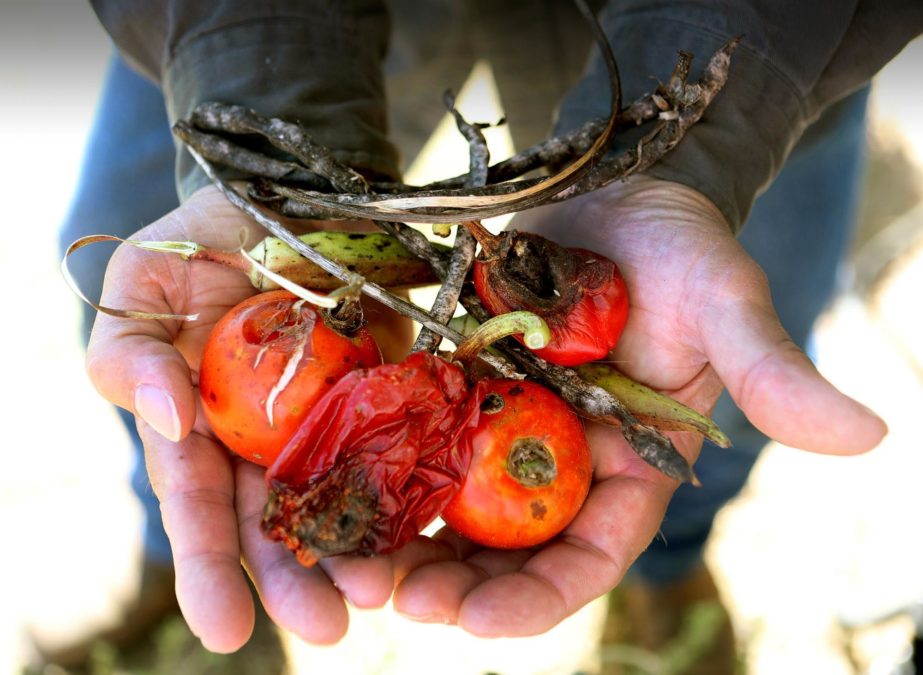
EPA approved dicamba for new uses on Monsanto’s GM crops, ignoring scientists’ warnings that it would evaporate, drift and ruin crops miles away. The result? Millions of acres of damage to crops, gardens and wild plants.
Reveal, from the Center for Investigative Reporting & FERN, November 13, 2018
Winner, SPJ NorCal Excellence in Journalism Award for Explanatory Journalism, 2019
3rd place, Association of Food Journalists Award, Best Story on Food Policy or Food Issues, 2019
The Best of Nonprofit News 2018, Money, Power & Influence
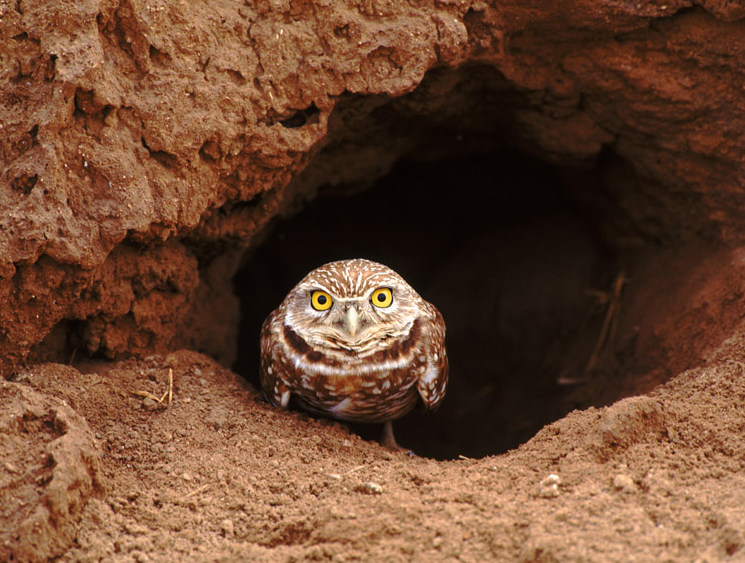
Everyone loves burrowing owls but many don’t realize that the prairie dogs and other burrowing mammals they love to hate are critical to the endearing owls’ survival.
PBS Nature, August 7, 2018
 For the past few months, I’ve been working on an investigative story that requires filing public records requests in several states. I tend to file more federal than state requests, which means I’m used to waiting, and waiting, to get my hands on documents. Sometimes they’re never produced.
So I was pleasantly surprised when several states produced the information I asked for within days or a week of my request. But then I ran up against the laws of Arkansas and Tennessee.
I knew a handful of states prohibit out-of-staters from obtaining records. But it wasn’t until this past week that I had to personally contend with laws that limit freedom of information requests to state residents only — even if the consequences of those actions cross state lines.
An attorney with an Arkansas state agency told me that he had the records I wanted, but was denying my request because I don’t live there. (I checked with a lawyer at the Reporters Committee for Freedom of the Press to make sure the residency requirement was still in effect. He confirmed that it is.)
I filed two public records requests in Tennessee, one to a university and another to a state agency. Jason Miller, an agency attorney, emailed me this message: “The Department denies your request pursuant to Tenn. Code Ann. §10-7-503(a)(2) on the basis that state records are open for personal inspection by any citizen of Tennessee, and your request does not appear to be submitted by a Tennessee citizen.” A university administrator told me she would deny my request unless I produced a valid Tennessee driver’s license or current utility bill.
Enterprising reporters can find proxies to file requests on their behalf. I found someone in Arkansas willing to help me through the Arkansas Press Association. I’m still working on finding a proxy in Tennessee. (For more tips on how to access public records from state and federal agencies, check out “The Science Writers’ Investigative Reporting Handbook.”)
Virginia also has a residency requirement, though it does allow exemptions for journalists whose outlets publish in the state.
Residency requirements impede journalists’ ability to do our jobs by blocking access to public documents that may be critical to investigations that cross state lines. They interfere with our ability to inform citizens about issues that affect them.
States have defended their residency requirements by saying out-of-state requests strain resources that should be reserved for their citizens. That’s what Virginia Solicitor General Earle Duncan Getchell argued in 2013 before the Supreme Court in McBurney v. Young.
The case was brought by two out-of-state residents, Mark McBurney of Rhode Island and Roger Hurlbert of California, who challenged Virginia’s denial of their request on constitutional grounds. Getchell argued that handling out-of-state requests creates a financial burden because the state has to hire people to do the work but can’t charge for overhead. “As one who is subject to FOIA requests,” Getchell argued, “we have a finite number of officials and employees who have to address these things.”
Several justices questioned whether fulfilling out-of-state requests really constitutes an added burden, since the state has to maintain the databases for Virginia citizens anyway. But in the end, they ruled in a unanimous decision that denying out-of-state residents access to government records does not violate the U.S. Constitution. “The Court has repeatedly stated that the Constitution does not guarantee the existence of FOIA laws,” Justice Samuel Alioto wrote.
Supreme Court decisions notwithstanding, there’s no doubt that states routinely make decisions that affect citizens beyond their borders. Consider the ongoing efforts by New York, Pennsylvania and other Northeastern states to curb air pollution from coal-fired plants in several states in the South and Midwest — including Virginia and Tennessee. Reporters and citizens in upwind states have every right to know why Tennessee, Virginia and neighboring states have failed to implement pollution controls.
Access to information may not be a constitutional right, but it’s essential for journalists to monitor government and serve the public interest. “Events that occur within Virginia are newsworthy beyond its borders, and non-citizen journalists across the country require access to state records in every jurisdiction,” a coalition of journalism groups argued in an amicus brief in support of McBurney and Hurlbert. “Access to state public records by non-citizens aids comparative and macro-analysis reporting thereby allowing the press to fulfill its watchdog role.”
Residency requirements make a mockery of the transparency that open government laws are meant to embrace. State officials who enforce these restrictions in effect say, we have the documents you want, but you don’t meet our arbitrary requirement, so we’re just not going to give them to you. That attitude undermines the public’s right to know what our government is up to.
The vast majority of states respect that right, with no residency restriction. We can continue to find people to file requests on our behalf in the few outlier states that don’t. Or maybe it’s time to push for an end to hollow talk by elected officials, and make state governments embrace both the spirit and intent of open records laws.

Health and science reporters received a shock a few weeks ago, when they learned they’d soon lose one of the smartest resources out there for covering health care. “It appears that this unique project’s span of more than 12 years of public service to journalism and to the general public will end in December, when HealthNewsReview.org ceases publication,” wrote the site’s founder and editor, Gary Schwitzer. “Our current funding ends then with no replacement funding in sight, and I will slip into retirement.”
The site’s experts and journalists analyze health care research and claims made in studies and press releases — often by calling out those who parrot hyped results — to help reporters avoid common pitfalls. It also provides a database of experts with no affiliation to industry, a particularly valuable tool, given the body of evidence showing that industry-funded research tends to favor the sponsor’s interests.
HealthNewsReview has long provided the type of critical oversight of health research that I wish we had for science reporting as a whole. (The Knight Science Journalism Tracker offered a similar service, peer reviewing science stories, until it shut down in 2014.) There’s no denying that it’s fun to write about the strange beauty of the natural world. And there’s certainly a need for those kinds of stories. But at a time when climate-change deniers occupy the highest offices in the land, it’s imperative that more science-savvy journalists spend time scrutinizing science, to uncover cases where it’s abused to serve private interests.
Many of the science reporters I interviewed for “The Science Writers” Investigative Reporting Handbook” have long covered science as they would any other beat. Deborah Blum, who runs the Knight Science Journalism Program at MIT, worries that science journalists are too often trained to think the official version of an event is the truth. Yet the truth is multifaceted, she told me, and in the end science is really just about people trying to understand the world around them. “That doesn’t elevate it from being a human enterprise just like everything else, full of hubris and ego and mistakes and cover-ups and all the other things that attend to every human enterprise.”
Journalists play a critical role in democracy by giving readers the information they need to be good citizens. Science journalists can do the same by treating science, and scientists, with skepticism. News stories about the latest science developments are important, said Charles Piller, an investigative reporter for Science magazine, but that’s just part of how the public should understand science. “That’s why investigations into all the elements that might undermine or corrupt or influence the way in which scientific work is understood and interpreted are really vital.”
Every day brings new details about the many ways the Trump administration is trying to delegitimize the science that underpins critical health and environmental regulations. We need all the tools at our disposal to monitor and expose abuses of science to serve powerful interests. I hope someone with deep pockets steps in to save HealthNewsReviews.org. But I also hope more science journalists are moved to dig beneath the surface to reveal when individuals and organizations distort science to subvert the public interest. That involves unearthing information of public importance that someone doesn’t want revealed. And making, rather than reporting, news. Now, more than ever, that’s exactly what democracy needs. As Zen radio reporter Scoop Nisker used to say, “If you don’t like the news, go out and make some of your own.”
As thousands of migrant children have been taken from their parents and sent to facilities across the country, questions are growing about the medical care they are receiving – or, as health experts fear, not receiving.
Reveal, Center for Investigative Reporting, June 25, 2018
Recognized, Best Shortform Science Writing
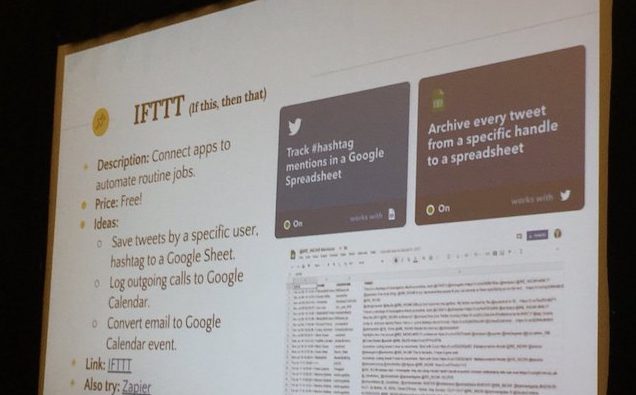
The annual Investigative Reporters and Editors conference, which wrapped up Sunday, is always jam-packed with tips, tools and advice for both novice and veteran investigators. But if, like me, you weren’t able to make it this year, there’s plenty of wisdom to be soaked up simply by scanning the #IRE18 feed on Twitter. Like this:
This app- If This, then That – will move items into a Google doc. Like all tweets with a certain hashtag. #ire18 @sarhutch @blatchfordtr pic.twitter.com/EMzobRBTMa
— Daniel Connolly 〽️ (@DanielConnolly) June 17, 2018
It’s well worth reading through the 2,000-plus tweets posted by reporters eager to share what they’d gleaned from some of the best in the business. But of course that takes time, so I’ve pulled out some pearls to ponder and resources to explore.
It’s inspiring to see the camaraderie and generosity of journalists trying to help their colleagues up their game and find and tell the best stories they can. They’ve offered tips on tracking this administration’s daily assaults on science, human rights and democracy, and encouraged reporters to figure out how those abuses are playing out in their communities and how to give voices to those struggling to be heard.
The sessions covered an incredible diversity of topics, from tips on reporting techniques (software for data reporting, investigative interviewing tips, data visualization programs) to advice on covering specific issues (guns, healthcare, crime labs) and much more. I’ve highlighted below some tips and resources to introduce science journalists to the mindset and tools investigative reporters learn. But I encourage you to scroll through #IRE18. You might find just the tool you’ve been looking for to add depth to your reporting.
“You should not be doing investigations on issues. You should be doing investigations on people swept up in the issues.” –@DwayneBrayESPN #IRE18
— Megan Raposa (@mlraposa) June 15, 2018
https://twitter.com/BetsBarnes/status/1007632139033153536?ref_src=twsrc%5Etfw
When you start a project, open 3 files, 1) chronology file – organize events by time. 2) Notes – one centralized searchable repository for photos. links. 3) questions file – list of questions you need answered. T Christian Miller #ire18
— Kim Clark (@kclarkcollege) June 15, 2018
https://twitter.com/maryannbatlle/status/1007652498696540160
If you have the time, have an off-the-record get-to-know-you conversation with sources. No notebooks. No recorders. Explain your process, schedule, etc., says T. Christian Miller #ire18
— Kim Clark (@kclarkcollege) June 15, 2018
Recovering from an electrifying weekend at #IRE18? Or missed the conference? There's plenty of tips & tools to explore & put to good use in your investigations, find them in this tipsheets & links page by @IRE_NICAR https://t.co/f6kACFCZjt pic.twitter.com/CpI6VeAl5C
— Global Investigative Journalism Network (@gijn) June 18, 2018
Of course, virtual tips from the conference are great, but there’s no substitute for being there. Look who showed up this year.
https://twitter.com/HunterMw/status/1007647790485426177
 A quarter-century ago, a hard-nosed Chicago Tribune investigative reporter named John Crewdson excoriated science journalists, in a piece headlined “Perky Cheerleaders,” for covering their beat as true believers, anxious for great scientists to perform great feats. “When Professor Schmidtlapp says he’s discovered something big, the science writers, their collective belief reaffirmed (and their own stature enhanced), don’t draw their guns and make him put his cards on the table,” Crewdson argued. “They don’t flyspeck his raw data, don’t check his funding sources, don’t scrutinize his previous articles for mistakes … They like science, they probably admire Schmidtlapp and they’re excited by the prospect that he’s right. So they just ask him how to spell whatever it is and write it down.”
A variation on the “science writers as stenographers” trope has emerged periodically ever since Crewdson landed this first blow. I appreciate the call for greater scrutiny of science and make a similar plea in The Science Writers’ Investigative Reporting Handbook — the third in a series of how-to guides published by members of SciLance, the science writers’ tribe who brought you this blog. (See below, for more on this series.)
But — and this is a big but — I believe this perennial knock on science writers deserves greater scrutiny as well. It overlooks the many examples of tough-minded stories that have revealed how individuals and powerful interests have used and abused science in pursuit of private gain. I also believe, based on countless conversations with colleagues over the years, that many science writers would like to try investigative reporting but haven’t done so because they weren’t sure how to start.
That’s why I sought — and gratefully received — a Peggy Girshman Idea Grant from the National Association of Science Writers. I wanted to demystify investigative reporting for my fellow science writers and give them both the tools and confidence to launch their own investigations. I wanted to share the knowledge I’d picked up on the fly as a greenhorn, and later gleaned from workshops, tutorials, my own accumulated experience and sage advice from veteran investigators. The grant gave me the opportunity to revisit all the materials I’d benefited from over the years and talk shop with veteran investigators who’d parlayed their indignation at injustice into reform-sparking exposés. (It’s not a coincidence that the acronym for Investigative Reporters and Editors is IRE.)
Some reporters believe there’s no real difference between investigative reporting and other types of journalism. For them, it’s all just good reporting. But investigative reporting carries risks you don’t have to worry about with other types of stories. Consider the definition an early mentor of mine, Joe Bergantino, uses in his trainings: investigative reporting is “making something public that someone would rather keep secret that’s of public importance.”
To break that down a little, you’re revealing something someone doesn’t want revealed. Something that has consequences for a lot of people — which means that “someone” probably is in a position of power. And that means there’s a lot riding on what you publish: it’s not just your subject’s reputation that could suffer but yours too, if your story turns out to be wrong. Even if your story is airtight, you’re likely to be extremely unpopular in certain circles. You might even get sued by subjects with the time and money to drag you through a frivolous lawsuit.
On the positive side — and I believe this is a big positive, which is why I wrote this book — you can change people’s lives for the better with these types of stories. And when you make every effort to nail down the facts, and ensure that you have legal protection, you start recognizing blowback for what it is: a sign that your story uncovered something someone would rather keep secret.
In the coming months I’ll share tips and insights from the book on this blog to help journalists — at least those with no intention of being perky cheerleaders — treat science with the same scrutiny they would any other human enterprise.

The Science Writers’ Investigative Reporting Handbook is available on Amazon. The other two guides in this series — The Science Writers’ Handbook and Michelle Nijhuis’ The Science Writers’ Essay Handbook — are also available on Amazon. All three handbooks were supported by NASW Idea Grants.
(Cross-posted from pitchpublishprosper.com.)